Rotary vs flat dies: when to use each
Four variables decide rotary vs flat: speed, tooling cost, material thickness and run length. Here is the analysis with real numbers.
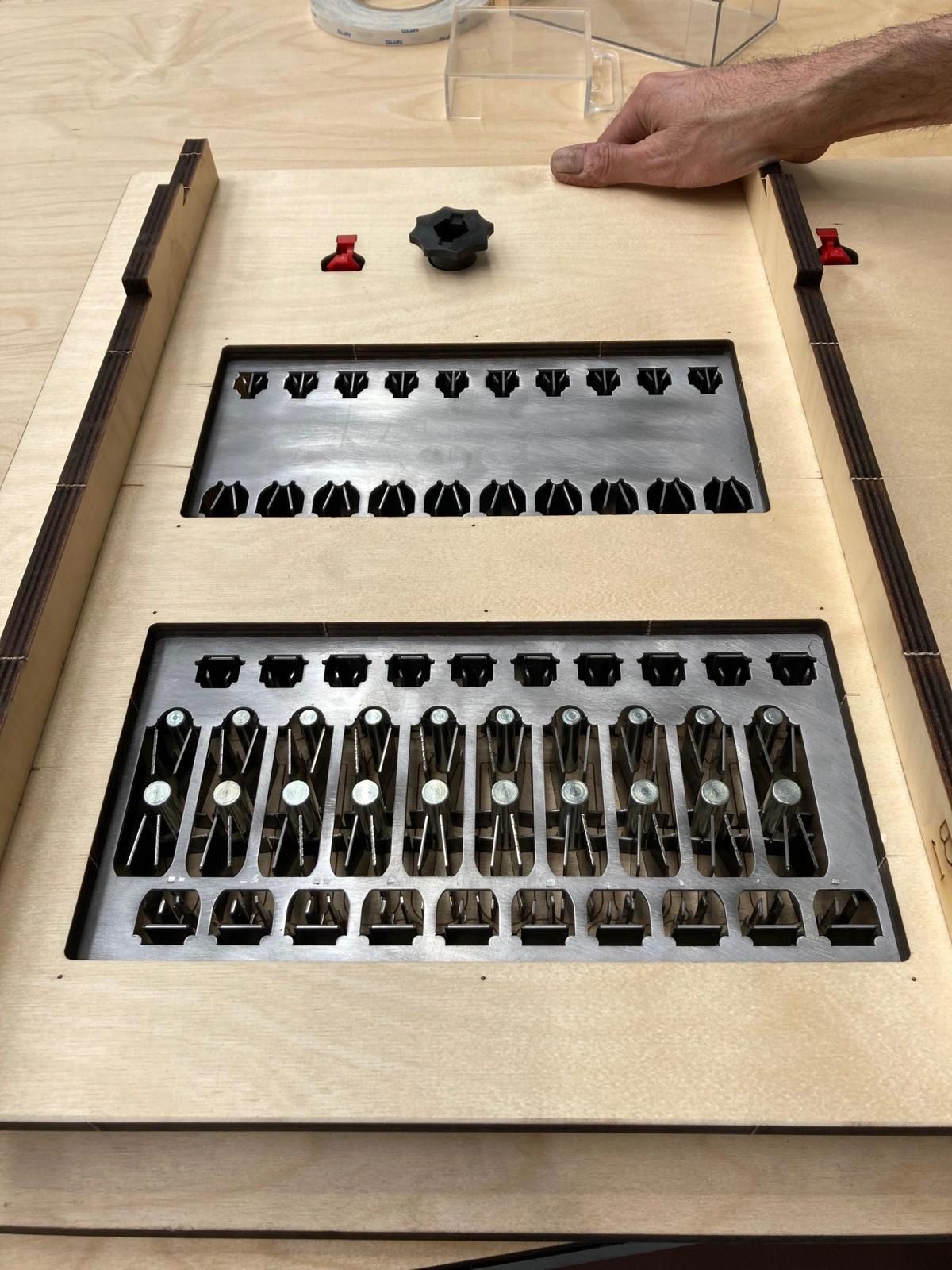
"Rotary or flat?" is the question we get most often in technical consulting. The short answer is "it depends", but we can be a lot more concrete than that. The choice is not ideological: there are four measurable variables that determine which option is correct in each case. This article breaks them down with typical figures from the packaging and automotive industries, so the decision moves from opinion to numbers.
Variable 1: production speed
A rotary die runs at 100–250 m/min on web, against the 6,000–12,000 sheets/hour of a flat cardboard line. If the plant's planning has demand peaks where the line is the bottleneck, rotary almost always wins. If the plant has spare machine capacity, the speed differential matters less.
A useful question: is line speed the factor limiting customer delivery? If yes, rotary becomes the default favourite.
Variable 2: tooling cost
A rotary die costs between 2× and 4× an equivalent flat die. The reason is the cylinder machining and the steel treatment. The upfront investment can be off-putting, but it has to be divided across the units it will cut before its first major sharpening:
- Flat on corrugated cardboard: 80,000 to 150,000 sheets before sharpening.
- Well-designed rotary: 500,000 to 2,000,000 linear metres before sharpening.
Cost per effective unit ends up lower on rotary when there is volume. The economic break-even tends to sit around 50,000 units per year per reference.
Variable 3: material thickness and stiffness
Rotary shines on web in moderate thickness ranges (up to 3 mm on corrugated, up to 1.5 mm on plastic). Once we move to rigid cardboards (>4 mm) or to multi-layer abrasive materials, flat still wins: rotary suffers irregular wear on the cylinder and sharpening costs spike.
For gaskets, seals and technical-foam insulation between 0.5 and 6 mm, both options are viable. The decision goes back to volume.
Variable 4: run length and reference mix
A reference change on a well-designed rotary with a quick-change fixture system drops to 8–15 minutes. On a classic flat die, changeover can take 30–60 minutes. If the plant produces many references in small batches, a well-designed rotary wins the mix. If runs are huge and changeovers rare, the difference fades.
Quick decision table
| Scenario | Recommendation |
|---|---|
| Annual run < 20,000 units | Flat |
| Annual run 20,000–50,000 | Case-by-case analysis |
| Annual run > 50,000 units | Rotary |
| Rigid / abrasive material / thickness > 4 mm | Flat |
| Web material, high line speed | Rotary |
| High reference mix / small batches | Rotary with quick-change |
The mistake we see most often
The frequent mistake is deciding by inertia: "we have always used flat, let's keep going" or "competitors bought rotary, so should we". Neither is an argument. The right decision comes from crossing the four factors above with the plant's actual reference portfolio and line hourly cost.
A worked case: 80,000 annual units across 12 references
A cosmetics-packaging client asked us the classic question some time ago. They produced 80,000 units a year across 12 active references, averaging 6,700 units per reference. The line ran a flat die per reference with slow changeovers. Intuition said rotary; the numbers said otherwise.
The cross-cut analysis showed the bottleneck was not die speed but changeover time. Replacing 12 flat dies with 12 rotaries cost more than the annual time-savings. The recommendation we made was to consolidate references into compatible families, drop to 5 versatile flat dies and optimise the fixture system. Per-unit cost fell 18% without changing technology.
The lesson: the problem is not always the die. Sometimes rotary is the answer. Sometimes it isn't. The numbers always indicate the right path if you ask for the right data.
Retrofit: moving from flat to rotary on an existing line
A recurring scenario is plants with historical flat lines considering migration to rotary. Investment is not just tooling — it includes line adjustments (web transport, tension control, counters), operator training, and a 4- to 8-week validation window. When this question comes up, we recommend modelling the 24-month return and, if uncertainty remains, validating with a single pilot reference before migrating the rest.
How we frame the analysis at TroqueLab
When a client is unsure, we ask for run-length data per reference for the past 12 months, hourly line cost, and the two-year commercial plan. With that we return an economic analysis with the break-even point between options and a documented recommendation. If you would like us to run that exercise for your line, you can consult our services or request the analysis directly.
Need Custom Die Manufacturing Solutions?
Our team of specialists is ready to help with your project. Get a free consultation.